Bosch 100 Series Dishwasher Manual: A Comprehensive Guide
This manual provides detailed instructions for the Bosch 100 Series, covering installation, operation, safety, and troubleshooting for models like SHE3AEM5N.
The Bosch 100 Series dishwashers represent a blend of efficiency and reliability, offering a practical solution for everyday dishwashing needs. This series is known for its quiet operation and effective cleaning performance. This comprehensive guide will walk you through everything from initial setup and safe usage to maintenance and troubleshooting. Accessing the online manual, or downloading a PDF version, ensures you have readily available support. Join the community and unlock the full potential of your appliance!
Understanding Your Dishwasher Model (SHE3AEM5N & Similar)
Bosch 100 Series models, such as the SHE3AEM5N, share core features but may have slight variations. Familiarize yourself with your specific model’s layout and controls. This manual covers common functionalities across the series. Before operation, carefully review the quick start and safety instructions. Knowing your dishwasher’s capabilities ensures optimal performance and prevents potential issues. Download the PDF manual for detailed diagrams and specifications related to your unit.
Safety Instructions & Warnings
Important safety instructions are crucial for preventing risks during installation and use. Read all precautions before operating the Bosch 100 Series dishwasher. These guidelines minimize electrical shock, fire hazards, and potential injury. Qualified installers should adhere to specific instructions. Ensure proper grounding and avoid using extension cords. Keep children away during operation and never allow them to play with the appliance. Disconnect power before maintenance.
General Safety Precautions
Before using your Bosch 100 Series dishwasher, carefully review all provided instructions. This appliance is intended for household use only. Avoid placing heavy objects on the door, as this could cause damage or injury. Do not sit or stand on the dishwasher. Keep the area around the appliance clear to ensure proper ventilation. Always supervise children near the dishwasher, and never allow them to operate it.
Electrical Safety Guidelines
Ensure the dishwasher is properly grounded to prevent electrical shock. Never operate the appliance if the power cord or plug is damaged. Disconnect the power supply before performing any maintenance or cleaning. Qualified installers should verify electrical connections meet local codes. Avoid using extension cords; a dedicated circuit is recommended. Do not expose electrical components to water or moisture, and always consult a technician for repairs.
Installation Instructions
Proper installation requires a qualified installer familiar with local codes. Ensure the water supply and drain lines are correctly connected. The dishwasher must be level and securely positioned. Carefully follow the provided instructions for electrical and plumbing connections. Verify adequate ventilation and accessibility for maintenance. Incorrect installation may void the warranty and compromise safety.
Qualified Installer Requirements

Installation must be performed by a licensed plumber and electrician, adhering to all local and national codes. The installer needs experience with dishwasher installations, including proper water line connections, drain hose routing, and electrical grounding. They should understand safety precautions and be capable of correctly leveling the appliance for optimal performance and preventing leaks.
Door Adjustment & Gap Specifications (70-100mm)
Proper door alignment is crucial; adjust using the installation instructions to maintain a 70-100mm gap. This prevents damage and ensures efficient operation. A correctly adjusted door avoids collisions with adjacent cabinets and allows for proper sealing during wash cycles. Insufficient gap may cause issues with drying, particularly plastic items.
Control Panel Overview

The Bosch 100 Series control panel features intuitive wash cycle selections and option buttons. Familiarize yourself with each cycle – Normal, Heavy, Auto – to optimize cleaning. Indicators display cycle progress and selected options like sanitize or extra dry. Understanding these controls ensures efficient and customized dishwashing performance, maximizing the appliance’s capabilities.
Wash Cycle Selection
The Bosch 100 Series offers varied wash cycles for different needs. The Normal cycle suits everyday loads, while Heavy Duty tackles baked-on messes. An Auto cycle adjusts settings for optimal cleaning. Selecting the appropriate cycle ensures efficient water and energy use, alongside sparkling clean dishes. Consider load size and soil level when choosing a cycle.

Option Buttons & Indicators
The control panel features option buttons like “Sanitize” for enhanced hygiene and “Delay Start” for convenient operation. Indicators illuminate to show cycle progress and selected options. A “Rinse Aid Low” indicator alerts you to refill. Understanding these buttons and lights is crucial for customizing wash cycles and monitoring the dishwasher’s status effectively.
Loading the Dishwasher
Proper loading maximizes cleaning performance. Arrange dishes so water reaches all surfaces, avoiding overcrowding. Place larger items on the lower rack and smaller items on the upper rack. Ensure spray arms aren’t blocked. Follow utensil placement guidelines, loading them basket-down for optimal cleaning. Avoid plastic items near the heating element.
Proper Rack Arrangement
Optimize space and cleaning by arranging dishes correctly. The lower rack is ideal for pots, pans, and larger plates, facing the center. The upper rack suits glasses, cups, and smaller items. Avoid overlapping dishes, ensuring water reaches all surfaces. Adjustable racks allow customization for varied loads, maximizing capacity and cleaning efficiency.
Utensil Placement Guidelines
Place utensils in the designated basket with handles down for optimal cleaning and safety. Mix forks, spoons, and knives to prevent nesting. Avoid overloading the basket, ensuring water circulation reaches each utensil. Larger utensils can lie flat; smaller ones should stand upright. This arrangement prevents re-soiling and maximizes washing performance.
Detergent & Rinse Aid

Bosch dishwashers perform best with quality detergents – powders, liquids, or pods are suitable. Use the correct amount based on water hardness and soil level. The rinse aid compartment ensures spotless results by reducing water spots and aiding drying. Regularly check and refill the rinse aid for consistently clean dishes.
Recommended Detergent Types
Bosch recommends using detergents specifically formulated for dishwashers, available as powders, liquids, or convenient pods. Avoid hand dish soap, as it creates excessive suds. For optimal cleaning, select a detergent appropriate for your water hardness level. Consider phosphate-free options for environmental responsibility, ensuring sparkling clean dishes every time.
Rinse Aid Compartment & Usage
The rinse aid compartment, typically located inside the dishwasher door, dispenses rinse aid during the final rinse cycle. This reduces water spots and improves drying performance, especially with plastic items. Adjust the rinse aid level based on water hardness; higher settings for harder water. Regularly check and refill the compartment for consistently spotless results.

Wash Cycles Explained
Bosch 100 Series dishwashers offer various cycles for different cleaning needs. The Normal cycle is ideal for everyday loads, while the Heavy Duty cycle tackles baked-on food residue. Other options may include Auto, Delicate, and Quick Wash. Cycle selection impacts water usage, temperature, and wash time, ensuring optimal cleaning and energy efficiency for each load.
Normal Cycle Details
The Normal cycle on your Bosch 100 Series dishwasher is designed for regularly soiled dishes. It utilizes moderate temperatures and spray pressure for effective cleaning. This cycle balances cleaning performance with energy and water conservation, making it suitable for daily use. Expect a typical duration of around 120-150 minutes, providing a thorough wash without excessive runtime.

Heavy Duty Cycle Details
The Heavy Duty cycle is ideal for tackling heavily soiled pots, pans, and casserole dishes. This cycle employs higher water temperatures and increased spray pressure to remove stubborn food residue. Expect a longer wash duration, typically between 150-180 minutes, ensuring a comprehensive clean. It’s recommended for items requiring intense cleaning power, but use sparingly to conserve energy.
Cleaning & Maintenance
Regular cleaning maintains optimal performance. Periodically inspect and clean the dishwasher’s filter to prevent clogs and ensure efficient drainage. Examine the spray arms for blockages, removing any debris with a toothpick. Wipe down the door and seals with a damp cloth. Running a dishwasher cleaner monthly helps eliminate odors and buildup, prolonging its lifespan.
Filter Cleaning Procedures
To clean the filter, twist and lift the lower spray arm, then remove the filter cylinder. Separate the filter components and rinse thoroughly under running water, removing food particles. Inspect the mesh for blockages and use a soft brush if needed. Reassemble the filter and secure it back into place, ensuring proper operation.
Spray Arm Inspection & Cleaning
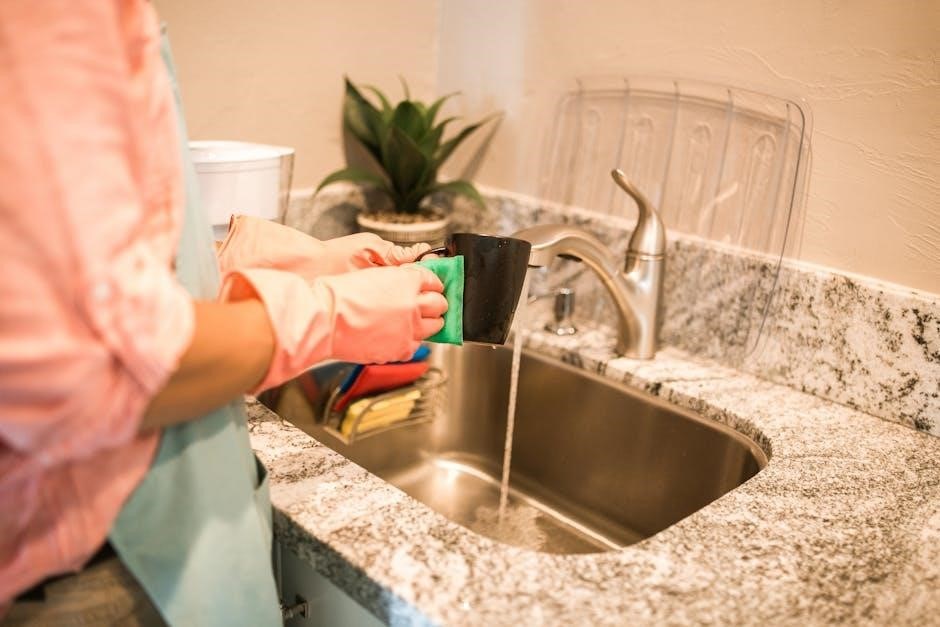
Regularly inspect the spray arms for blockages. Remove the upper and lower spray arms by unscrewing or unclipping them. Use a toothpick or small wire to clear any food debris from the spray nozzles. Rinse the arms thoroughly under running water to ensure unobstructed water flow. Reattach the spray arms securely, verifying free rotation.
Troubleshooting Common Issues
If your Bosch 100 Series dishwasher isn’t starting, check the power supply and door latch. For poor cleaning, verify proper loading, detergent usage, and spray arm functionality. Inspect the filter for clogs. If issues persist, consult the error code section or contact authorized service. Addressing these common problems can restore optimal dishwasher performance.
Dishwasher Not Starting
If your Bosch 100 Series dishwasher fails to start, first confirm it’s properly plugged in and the circuit breaker hasn’t tripped. Ensure the door is securely latched; a loose latch prevents operation. Check for any displayed error codes, as these offer clues; If problems continue, consult a qualified technician for assistance.

Poor Cleaning Performance
Experiencing unsatisfactory cleaning? Verify proper loading – avoid overcrowding and ensure spray arms rotate freely. Confirm adequate detergent is used, selecting the appropriate type for your water hardness. Inspect and clean the filter regularly to remove food particles. A clogged filter significantly reduces cleaning effectiveness. Run a hot water cycle before starting a wash.
Error Codes & Their Meanings
Bosch dishwashers utilize error codes to diagnose issues. Decoding these messages is crucial for effective troubleshooting. Common codes indicate problems like water supply issues, drainage malfunctions, or sensor failures. Refer to the full manual’s dedicated error code section for a comprehensive list and suggested resolutions. Resetting the dishwasher may clear minor errors, but persistent codes require service.
Decoding Error Messages
Bosch error messages provide vital clues to dishwasher malfunctions. These alphanumeric codes pinpoint specific problems, ranging from water inlet issues to pump failures. The manual details each code’s meaning, enabling users to understand the nature of the fault. Accurate decoding avoids unnecessary service calls and facilitates targeted troubleshooting, potentially resolving issues independently before contacting a technician.
Resetting the Dishwasher
Resetting your Bosch dishwasher can resolve minor electronic glitches or clear error codes after addressing the underlying issue. Typically, this involves powering off the dishwasher at the circuit breaker for a specified duration – usually one to five minutes. Re-establishing power allows the control module to reboot, potentially restoring normal operation. Consult the manual for specific reset procedures for your model.
Technical Specifications
Bosch 100 Series dishwashers offer standard dimensions, typically around 34.5 inches in height, 24 inches in width, and 24 inches in depth. Capacity varies by model, generally accommodating 12-14 place settings. Water consumption is designed for efficiency, using approximately 3.5 to 4.5 gallons per cycle. Detailed specifications, including electrical requirements, are available in the full product manual.
Dimensions & Capacity
Bosch 100 Series dishwashers generally measure 34.5” (H) x 24” (W) x 24” (D), fitting standard kitchen cutouts. Internal capacity typically allows for 12-14 place settings, accommodating various dishware sizes. Precise dimensions and capacity details can differ slightly between specific models (like SHE3AEM5N). Refer to your model’s full manual for exact measurements and loading guidelines.
Water Consumption Details
Bosch 100 Series dishwashers are designed for water efficiency, utilizing approximately 3.0 to 4.0 gallons per wash cycle, depending on the selected cycle. Eco cycles minimize water usage further. Actual consumption varies based on water pressure and cycle selection. Checking the specific model’s documentation (SHE3AEM5N) provides precise water usage figures for each wash program.
Downloading the PDF Manual

Accessing the official Bosch 100 Series dishwasher (like SHE3AEM5N) manual in PDF format is straightforward. Visit the Bosch website and navigate to the support section. Search for your specific model number to locate and download the complete manual. Saving a local copy ensures offline access to crucial information, including safety instructions and troubleshooting guides.
Accessing the Online Manual
Bosch provides convenient online access to the 100 Series dishwasher manual. Simply visit the official Bosch support website and enter your model number – such as SHE3AEM5N – into the search bar. This allows you to view the manual directly in your web browser, offering quick access to instructions and troubleshooting tips without needing a download.
Saving the Manual for Offline Use
To ensure access even without an internet connection, download the Bosch 100 Series dishwasher manual as a PDF file. This allows you to save it directly to your computer, tablet, or smartphone. Having a local copy is especially useful during installation or when troubleshooting in areas with limited connectivity, providing readily available instructions;