Understanding proper torque specifications is crucial when working with stainless steel fasteners, ensuring joint integrity and preventing failures.
Numerous resources, including downloadable PDF charts from organizations like the British Stainless Steel Association, offer guidance on achieving optimal tightening.
Importance of Correct Torque
Achieving the correct tightening torque for stainless steel bolts is paramount for several reasons. Under-torquing can lead to joint loosening, potentially causing vibrations, leaks, or even catastrophic failure in critical applications. Conversely, over-torquing risks stripping threads, damaging the bolt head, or inducing stress corrosion cracking – particularly problematic with stainless steel’s susceptibility to certain failure modes.
Reliable torque data, often found in PDF format from sources like the British Stainless Steel Association, provides a baseline for safe and effective assembly. These charts account for material grade (A2-50, A2-70, A4-80), thread type, and surface finish, ensuring the applied force is appropriate. Utilizing these resources minimizes risks and maximizes the longevity and performance of bolted connections.
Understanding Bolt Grades and Materials
Stainless steel bolts aren’t universally identical; their mechanical properties vary significantly based on grade and alloy composition. Common grades include A2-50, A2-70, and A4-80, each offering different levels of strength and corrosion resistance. A PDF torque chart must specify the grade, as tightening values differ substantially between them.
Material properties directly influence the required torque. Higher grade stainless steels (like A4-80) can withstand greater clamping forces. Understanding these nuances is vital; a chart designed for A2-50 won’t be suitable for A4-80. Furthermore, factors like thread type (coarse vs. fine) and lubrication, detailed in comprehensive torque guides, also impact the final torque value.
Stainless Steel Grades and Their Properties
Various stainless steel grades—A2-50, A2-70, and A4-80—possess unique characteristics impacting torque requirements, detailed within specialized PDF charts for accurate fastening.
A2-50 Stainless Steel
A2-50, a common austenitic stainless steel, offers good corrosion resistance and is frequently used in marine and chemical environments. When determining the appropriate tightening torque for A2-50 bolts, referencing a comprehensive PDF chart is essential. These charts typically provide torque values based on bolt size, thread type (coarse or fine), and whether lubrication is applied.
Generally, A2-50 requires lower torque values compared to higher-grade stainless steels. The provided data suggests values around 2.5 in-lbs for a 2-56 size bolt when dry. However, always consult a reliable torque chart, often available as a PDF download from fastener suppliers or industry associations like the British Stainless Steel Association, to ensure accurate and safe assembly. Ignoring proper torque can lead to joint failure or corrosion issues.
A2-70 Stainless Steel
A2-70 stainless steel represents a higher strength variant within the A2 series, offering improved mechanical properties and corrosion resistance. Accurate tightening torque is paramount for A2-70 fasteners, and utilizing a detailed PDF torque chart is highly recommended. These charts account for factors like bolt diameter, thread pitch, and lubrication status.
Compared to A2-50, A2-70 bolts generally require slightly higher torque values to achieve the desired clamping force. For instance, a 2-56 A2-70 bolt, when dry, might need around 2.6 in-lbs of torque. Always prioritize consulting a reliable PDF resource – often available from the British Stainless Steel Association or fastener manufacturers – to guarantee correct installation and prevent potential issues like thread stripping or joint loosening.
A4-80 Stainless Steel
A4-80 stainless steel provides superior corrosion resistance, particularly in chloride-rich environments, making it ideal for marine applications. Determining the correct tightening torque for A4-80 fasteners necessitates referencing a comprehensive PDF torque chart. These charts detail recommended values based on bolt size, thread type, and lubrication conditions.
While A4-80 offers excellent durability, improper torque can compromise its performance. A 2-56 A4-80 bolt, for example, may require a torque value similar to A2-70, around 2.6 in-lbs when dry. Always consult a trusted PDF source, such as those provided by the British Stainless Steel Association, to ensure accurate installation and avoid issues like thread damage or insufficient clamping force.
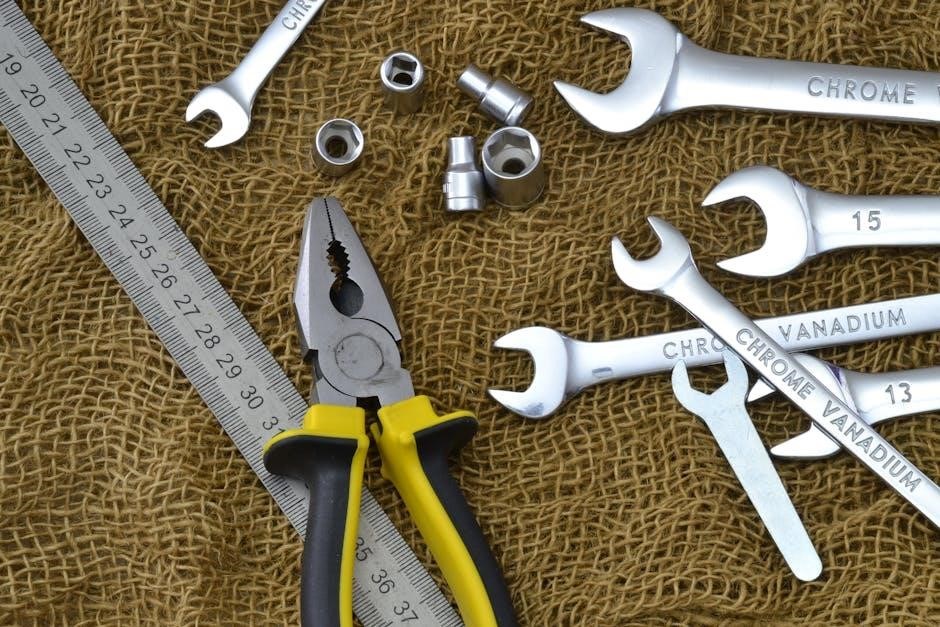
Factors Affecting Tightening Torque
Several variables impact torque needs, including thread type and lubrication; consult a PDF chart for precise values based on these conditions and fastener grade.
Thread Type (Coarse vs. Fine)
The distinction between coarse and fine threads significantly influences the required tightening torque for stainless steel bolts. Coarse threads, with fewer threads per inch, generally demand lower torque values compared to fine threads of the same diameter and material. This is because coarse threads have a larger root area, distributing the clamping force over a wider surface.
When referencing a stainless steel bolt tightening torque chart – often available as a PDF document – it’s vital to confirm whether the specified values correspond to coarse or fine threads. Using the incorrect torque value for the thread type can lead to under-tightening, risking joint separation, or over-tightening, potentially causing thread stripping or fastener failure. Always prioritize matching the chart’s specifications to the actual bolt’s thread configuration for reliable performance.
Lubrication
Lubrication dramatically affects the tightening torque required for stainless steel bolts. A lubricated bolt will achieve the same clamping force at a significantly lower torque value compared to a dry bolt. This is due to the reduced friction between the threads. Stainless steel bolt tightening torque charts, frequently found in PDF format, often provide separate values for dry and lubricated conditions.
It’s crucial to adhere to the chart’s specified lubrication conditions. If a chart lists torque values for a lubricated bolt, using a dry bolt with those values will result in over-tightening and potential damage. Conversely, using a lubricated bolt with dry torque values will lead to insufficient clamping force. Always verify the chart’s assumptions regarding lubrication before applying torque.
Surface Finish
The surface finish of both the bolt and the nut significantly impacts the friction coefficient, and therefore, the required tightening torque. Rougher surfaces create more friction, necessitating higher torque values to achieve the desired clamping force. Stainless steel bolt tightening torque charts, often available as PDF downloads, generally assume a standard surface finish.
Deviations from this standard – such as coatings (zinc plating, oxide finishes) or particularly rough machining – will alter the torque requirements. Charts may offer adjustments for common finishes, but for unusual surfaces, testing is recommended. Always consult the PDF chart’s notes regarding surface finish assumptions to ensure accurate torque application and prevent issues like thread galling or insufficient clamping.
Torque Charts for Stainless Steel Bolts (Metric)
Metric torque charts, frequently found as downloadable PDF documents, provide values based on bolt grade (5.6, 8.8, 10.9, 12.9) and size for accurate tightening.
Torque Values for Grade 5.6 Stainless Steel
Grade 5.6 stainless steel bolts, commonly used in less demanding applications, require careful torque application to avoid stripping threads or compromising joint strength.
Referencing a comprehensive PDF torque chart is essential for precise values. For example, a 2-56 size bolt, when dry, typically needs around 2.5 in-lbs of torque.
With a black oxide finish, this value remains consistent.
However, with clear or yellow zinc plating, it slightly decreases to 2.1 in-lbs.
Lubrication can further alter these figures, generally reducing the required torque.
Always consult a reliable chart, like those provided by the British Stainless Steel Association, for specific dimensions and conditions to ensure optimal performance and longevity of the bolted joint.
Torque Values for Grade 8.8 Stainless Steel
Grade 8.8 stainless steel bolts, offering increased strength over 5.6, demand precise tightening torque for reliable performance. A detailed PDF torque chart is indispensable for accurate application. Considering a 2-56 bolt, a dry installation requires approximately 2.6 in-lbs of torque.
A black oxide finish maintains this value, while clear or yellow zinc plating reduces it slightly to 2.2 in-lbs.
Lubrication will further decrease the necessary torque. Always prioritize consulting a reputable chart, such as those from the British Stainless Steel Association, to account for specific bolt sizes and finishes, guaranteeing a secure and durable connection.
Torque Values for Grade 10.9 Stainless Steel
High-strength Grade 10.9 stainless steel bolts necessitate meticulous torque control, and a comprehensive PDF chart is essential for correct installation. For a 2-56 bolt, dry tightening typically requires a torque of around 2.1 in-lbs.
However, surface treatments like black oxide maintain this value, while zinc plating (clear or yellow) may slightly reduce it.
Lubrication significantly lowers the required torque. Always refer to detailed charts, including those provided by the British Stainless Steel Association, to ensure accurate torque application based on bolt size, thread type, and finish, preventing both loosening and damage.
Torque Values for Grade 12.9 Stainless Steel
Grade 12.9 stainless steel, representing an exceptionally high tensile strength, demands precise torque application, best guided by a detailed PDF torque chart. While specific values vary with size and thread, a 2-56 bolt, when dry, generally requires around 2.6 in-lbs of torque.
Surface finishes—black oxide, zinc plating—influence these values, often requiring slight adjustments. Lubrication dramatically reduces the necessary torque. Consulting resources like the British Stainless Steel Association’s data is vital for accurate tightening, preventing thread stripping or bolt failure due to overstress.
Torque Charts for Stainless Steel Bolts (Imperial)
Imperial sizing requires specific torque values, readily available in comprehensive PDF charts detailing recommended tightening torques for various bolt sizes and materials.
Torque Values for 2-56 Stainless Steel Bolts
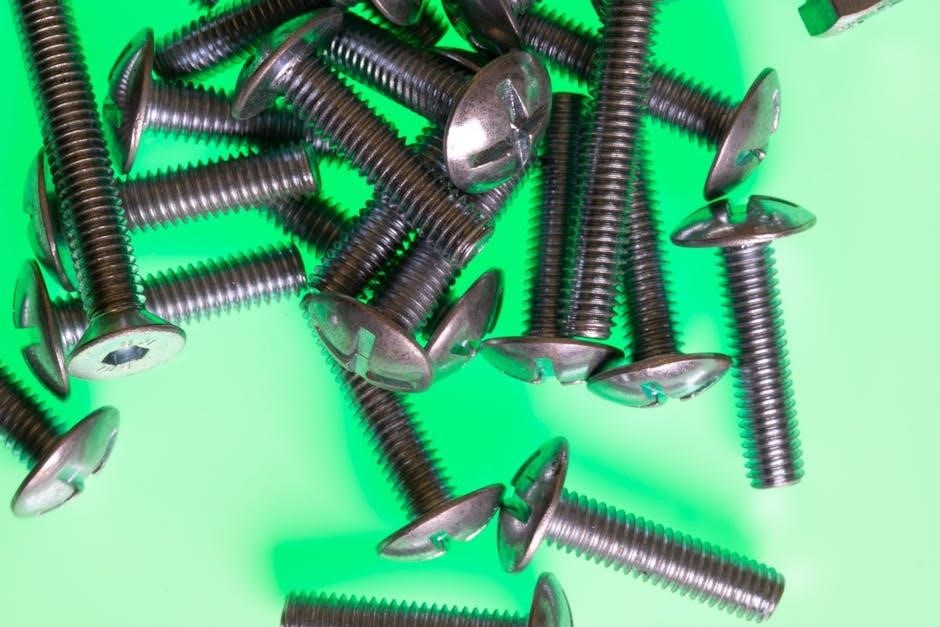
Determining the correct tightening torque for a 2-56 stainless steel bolt is vital for secure fastening. Consulting a reliable PDF torque chart reveals variations based on material class and finish. For untreated stainless steel, a dry 2-56 bolt generally requires approximately 2.5 in-lbs of torque.
However, if the bolt has a black oxide finish, the recommended torque remains consistent at 2.5 in-lbs. Clear or yellow zinc plating also maintains this value. When lubrication is applied, torque values slightly decrease; for instance, a lubricated 2-56 stainless steel bolt may only need 2.1-2.2 in-lbs. Always prioritize referencing a detailed PDF chart for precise specifications, as these values serve as general guidelines.
Torque Values for 4-40 Stainless Steel Bolts
Accurate torque application is paramount for 4-40 stainless steel bolts, and referencing a comprehensive PDF torque chart is highly recommended. Dry, untreated 4-40 stainless steel bolts typically require around 2.6 in-lbs of torque for proper tightening. A black oxide finish doesn’t significantly alter this value, remaining near 2.6 in-lbs.
Similarly, bolts with clear or yellow zinc plating also fall within the 2.6 in-lbs range. Lubrication introduces a slight reduction; a lubricated 4-40 stainless steel bolt may only need approximately 2.2-2.3 in-lbs. Remember, these figures are general guidelines, and consulting a detailed PDF resource ensures adherence to precise specifications for optimal joint performance and longevity.
Torque Values for 6-32 Stainless Steel Bolts
Determining the correct tightening torque for 6-32 stainless steel bolts necessitates consulting a reliable PDF torque chart. For dry, untreated 6-32 stainless steel fasteners, a torque value of approximately 2.5 in-lbs is generally recommended. Applying this torque ensures sufficient clamping force without risking thread damage.
Bolts featuring a black oxide finish maintain a similar torque requirement, staying close to 2.5 in-lbs. Clear or yellow zinc plating also doesn’t drastically alter the value. However, lubrication significantly reduces the needed torque; lubricated 6-32 stainless steel bolts typically require around 2.1-2.2 in-lbs. Always prioritize a detailed PDF chart for precise specifications.
Using a Torque Wrench
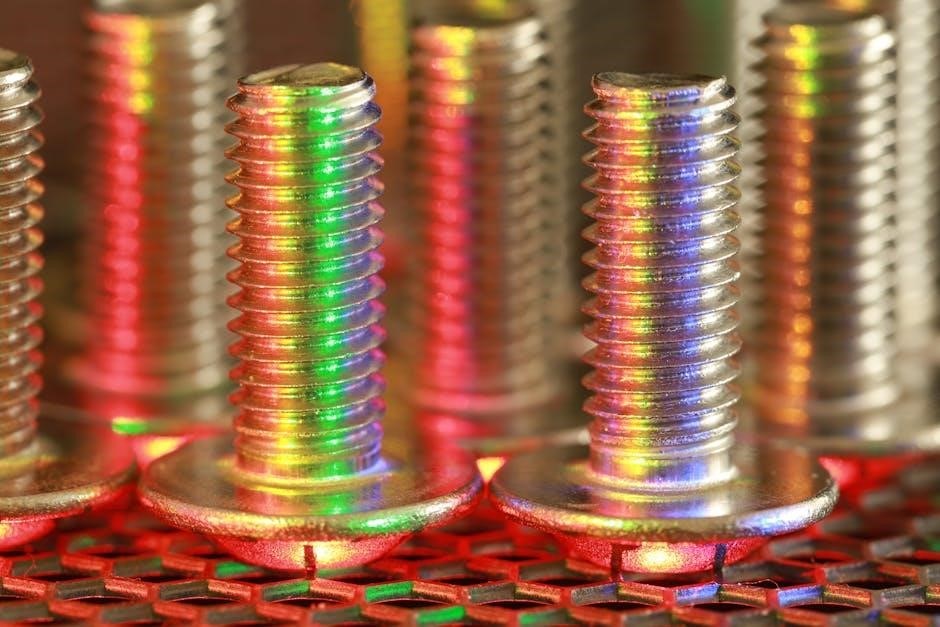
Employing a torque wrench, guided by a PDF chart, is essential for accurate tightening of stainless steel bolts, preventing over or under-tightening issues.
Types of Torque Wrenches
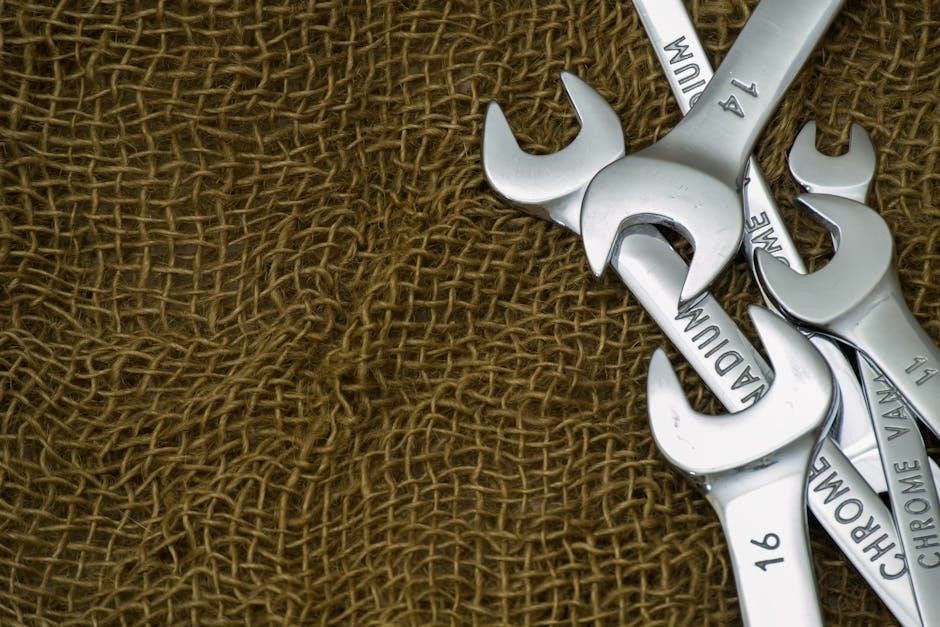
Several types of torque wrenches are available, each suited for different applications when referencing a stainless steel bolt tightening torque chart PDF. Click-type wrenches are popular for their affordability and ease of use, providing an audible and tactile click when the desired torque is reached. Beam-type wrenches offer a visual reading of applied torque, relying on a pointer and scale.
Digital torque wrenches provide the most precise measurements, displaying torque values on a digital screen and often storing readings. Hydraulic torque wrenches are used for high-torque applications, commonly found in industrial settings. Selecting the appropriate wrench depends on the torque range specified in the PDF chart, the accessibility of the fastener, and the required level of accuracy. Proper wrench selection, alongside a reliable torque chart, ensures secure and consistent fastening.
Calibration of Torque Wrenches
Maintaining accurate torque readings is paramount when utilizing a stainless steel bolt tightening torque chart PDF. Torque wrenches require periodic calibration to ensure they deliver precise torque values. Over time, the internal mechanisms can drift, leading to under- or over-tightening of fasteners. Calibration should be performed at least annually, or more frequently with heavy use.
Certified calibration services employ specialized equipment to verify and adjust the wrench’s accuracy against traceable standards. A calibration certificate provides documented proof of the wrench’s performance. Ignoring calibration can compromise joint integrity and potentially lead to failures, rendering the PDF chart’s recommendations ineffective. Regular calibration guarantees reliable fastening and safety.
PDF Resources and Charts
Numerous downloadable PDF charts, like those from the British Stainless Steel Association, provide essential stainless steel bolt tightening torque data for accurate installations.
British Stainless Steel Association Torque Data
The British Stainless Steel Association (BSSA) offers comprehensive resources, including detailed PDF documents, focusing on the pre-load and tightening torques for stainless steel fasteners with coarse metric threads. These charts are invaluable for engineers and technicians seeking accurate guidance.
The BSSA data considers various stainless steel grades – A2-50, A2-70, A4-80, and others – and provides recommended torque values for both untreated and finished fasteners (e.g;, black oxide, zinc plated).
These resources emphasize that the provided torque values serve as general guidance, and adjustments may be necessary based on specific application requirements, lubrication conditions, and thread type. Accessing these PDF charts ensures adherence to industry best practices and promotes reliable, long-lasting bolted joints. Always refer to the latest BSSA publications for the most up-to-date information.
Online Torque Charts and Calculators
Numerous websites provide convenient access to stainless steel bolt tightening torque charts, often in PDF format, and interactive calculators. These online tools simplify the process of determining appropriate torque values based on bolt size, material grade, and thread type.
Many resources categorize data by metric and imperial measurements, offering flexibility for diverse applications.
However, it’s crucial to verify the source’s credibility and ensure the charts align with recognized standards like those published by the British Stainless Steel Association. Online calculators can be particularly helpful, but always double-check the results against established PDF charts for accuracy and safety. Responsible use of these tools ensures proper fastener tightening and joint reliability;
Torque Considerations for Different Materials
When joining dissimilar materials, like stainless steel to aluminum or brass, adjust torque values; PDF charts offer guidance for these combinations.
Brass Fasteners
Brass fasteners, when used with stainless steel, require significantly reduced tightening torque compared to steel-to-steel applications. This is due to brass’s lower shear strength and susceptibility to deformation under high stress. PDF resources, such as those from fastener manufacturers and engineering databases, provide specific torque recommendations for brass fasteners, often expressed in inch-pounds (in-lbs).
Generally, a derating factor is applied to stainless steel torque values when fastening into brass. Always consult a reliable torque chart or calculator, considering thread size, material pairings, and lubrication. Overtightening brass fasteners can easily lead to thread stripping or fastener failure, compromising the joint’s integrity. Proper torque application ensures a secure and lasting connection without damaging the softer brass material.
Aluminum Fasteners
Aluminum fasteners, similar to brass, demand lower tightening torques than stainless steel when used in conjunction. Their lower tensile strength necessitates careful torque control to prevent thread galling or fastener breakage. PDF torque charts often detail specific values for aluminum alloys, frequently referencing 2024-T4 as a common material.
Lubrication plays a critical role when fastening stainless steel into aluminum, reducing friction and minimizing the risk of seizing. Always consult a reliable torque chart, factoring in thread size, lubrication type, and material compatibility. Overtightening can easily crush the aluminum threads, leading to joint failure. Precise torque application, guided by documented specifications, ensures a secure and durable connection.
Monel Fasteners
Monel, a nickel-alloy known for its corrosion resistance, requires specialized torque considerations when paired with stainless steel. PDF resources detailing fastener torque values often include Monel specifications, acknowledging its unique properties. Generally, Monel exhibits higher strength than brass or aluminum, but lower than many stainless steel grades.
Therefore, torque values fall within an intermediate range, demanding careful attention to chart recommendations. Lubrication is vital to prevent galling, especially when joining dissimilar metals. Always verify the specific Monel alloy used, as variations impact optimal torque. Accurate torque application, guided by reliable charts, ensures a robust and corrosion-resistant assembly.
Potential Issues with Overtightening
Overtightening stainless steel bolts, despite PDF chart guidance, can lead to stripped threads or catastrophic bolt failure, compromising joint integrity and safety.
Stripped Threads
Stripped threads represent a common and frustrating consequence of applying excessive torque to stainless steel fasteners, even when referencing a PDF torque chart. Stainless steel, while corrosion-resistant, isn’t infinitely strong; exceeding its yield strength deforms the threads. This damage occurs when the force applied surpasses the material’s ability to withstand it, effectively removing the gripping ability of the bolt and the receiving hole.
A stripped thread compromises the clamping force, potentially leading to joint failure. Repairing stripped threads often requires costly and time-consuming procedures like re-tapping or using thread repair inserts (e.g., Heli-Coil). Prevention, through accurate torque application guided by reliable charts and calibrated tools, is far more efficient than remediation. Always consult appropriate PDF resources for specific grade and size recommendations.
Bolt Failure
Bolt failure, a severe outcome of overtightening, extends beyond merely stripping threads and can manifest as fracture or plastic deformation. Relying on a PDF torque chart is essential, but proper application is paramount. Exceeding the tensile strength of the stainless steel bolt, even with seemingly minor over-torquing, induces stress beyond its capacity. This can lead to immediate breakage, particularly in smaller diameter bolts.
Alternatively, gradual plastic deformation weakens the bolt, reducing its clamping force over time and increasing the risk of eventual failure. Utilizing accurate torque wrenches and referencing reliable PDF guides specific to the bolt grade (A2-50, A2-70, A4-80 etc.) minimizes this risk. Ignoring recommended torque values compromises structural integrity and safety.